logo
Giá tốt trực tuyến

Chi tiết sản phẩm

Created with Pixso. Nhà Created with Pixso. các sản phẩm Created with Pixso.
Máy đóng cặn
Created with Pixso. Stationary Scrap Baler with Feeding Grapple for Mixed Metal Recovery

Stationary Scrap Baler with Feeding Grapple for Mixed Metal Recovery

Tên thương hiệu: WANSHIDA
Số mô hình: Y83/D-3000C
MOQ: 1 bộ
giá bán: negotiable
Thời gian giao hàng: 25 ngày
Điều khoản thanh toán: T/T, L/C, Western Union
Thông tin chi tiết
Nguồn gốc:
Trung Quốc
Chứng nhận:
CE and ISO9001
Tên sản phẩm:
Máy ép kiện kim loại phế liệu
Nhấn kích thước phòng:
3000x1620x620mm/Tùy chỉnh
Kích thước kiện:
500x400×400mm/Tùy chỉnh
Động cơ Diesel:
86kW
Dung tích:
5-7tấn/h
Quyền lực:
Diesel
Hoạt động:
Điều khiển tự động PLC
Kích thước:
7200x2300x3500mm
chi tiết đóng gói:
Đóng gói đi biển
Khả năng cung cấp:
30 bộ/tháng
Mô tả sản phẩm

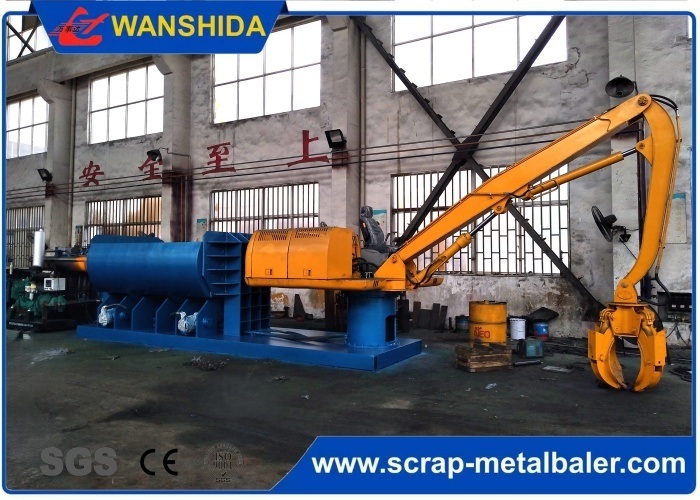
Stationary Scrap Baler with Feeding Grapple for Mixed Metal Recovery

The Stationary Scrap Baler with Feeding Grapple is designed for recycling facilities that require continuous loading, stable hydraulic compaction, and efficient handling of mixed metal scrap. Unlike conventional balers that rely on forklifts for every loading cycle, this machine integrates a hydraulic feeding grapple with a stationary compression system, allowing loose scrap to be picked up, transferred, and compressed in a continuous workflow. It is suitable for processing mixed steel scrap, aluminum profiles, light ferrous materials, and other recyclable metals in medium and large recycling operations.


1. Product Overview

Modern recycling plants handle a wide variety of metal scrap every day. These materials often differ in size, shape, density, and loading characteristics. Lightweight steel offcuts, aluminum profiles, sheet metal, mixed ferrous scrap, and irregular production waste are difficult to feed consistently using only forklifts or loaders.

The Stationary Scrap Baler with Feeding Grapple is developed specifically to solve this challenge.

Instead of depending on external loading equipment for every compression cycle, the integrated hydraulic feeding grapple automatically transfers loose materials into the compression chamber. This creates a smoother production rhythm while reducing interruptions during daily recycling operations.

The combination of a stationary hydraulic baler and a feeding grapple enables continuous material preparation before compression, making the equipment suitable for recycling plants that process irregular scrap throughout the working day.

Rather than focusing only on compression force, this machine improves the entire material handling process from scrap collection to bale discharge.


2. Why Choose a Feeding Grapple Instead of Conventional Loading?

One of the biggest differences between this machine and a conventional hydraulic scrap baler is the feeding method.

Traditional balers normally require a forklift or wheel loader to feed material into the chamber. During busy production periods, loading equipment often becomes the bottleneck because operators must repeatedly stop, reposition, and reload the baler.

An integrated feeding grapple changes this workflow.

Loose scrap can be picked up directly from the stockpile and transferred into the compression chamber with a more consistent feeding rhythm. This helps reduce waiting time between compression cycles and allows the hydraulic system to operate with fewer interruptions.

For recycling plants processing mixed metal scrap throughout the day, maintaining a continuous material flow is often more important than simply increasing compression force.

This is why many modern stationary balers used in recycling facilities incorporate automatic feeding devices to improve overall operating efficiency.


3. Engineering Insight

From our engineering experience, customers handling mixed scrap often encounter two common problems:

First, loose materials such as aluminum profiles, light steel scrap, and production offcuts rarely accumulate in uniform piles. Forklift loading can therefore become inconsistent, causing uneven chamber filling and unnecessary idle time.

Second, when one operator must control both loading equipment and the baler, the compression system frequently waits for material instead of working continuously.

A stationary scrap baler equipped with a feeding grapple helps reduce these interruptions by allowing the loading process to follow a more regular cycle. While actual productivity depends on scrap characteristics, site layout, and operator practices, a more consistent feeding rhythm can simplify day-to-day recycling operations.


4. Typical Materials

This equipment is suitable for processing a wide range of recyclable metal materials, including:

  • Mixed steel scrap
  • Aluminum extrusion scrap
  • Aluminum window profiles
  • Light ferrous scrap
  • Steel offcuts
  • Sheet metal scrap
  • Manufacturing production waste
  • Loose structural steel sections
  • Light demolition scrap
  • Mixed recyclable metal materials

Rather than being designed for one specific material, the feeding grapple makes the machine particularly suitable for operations where scrap composition changes throughout the day.


5. Typical Customers

This equipment is commonly selected by:

  • Metal recycling companies
  • Scrap collection centers
  • Aluminum recycling facilities
  • Steel processing workshops
  • Automotive dismantling companies
  • Manufacturing plants generating mixed metal waste
  • Regional scrap transfer stations
  • Industrial recycling contractors

Unlike small manual balers, this stationary system is intended for customers requiring continuous daily recycling operations.


6. Application Scenarios

Unlike conventional hydraulic balers that are mainly used for compressing uniform scrap materials, the Stationary Scrap Baler with Feeding Grapple is designed for recycling facilities where scrap characteristics change continuously throughout the working day.

The integrated feeding grapple allows operators to handle irregular, loose, and lightweight materials more efficiently while maintaining a stable hydraulic compression workflow.

6.1 Mixed Metal Recycling Centers

Many recycling centers receive different types of scrap from multiple suppliers every day. Materials often include light steel scrap, aluminum profiles, sheet metal, manufacturing offcuts, and irregular metal components.

Because the material composition changes constantly, maintaining a continuous feeding rhythm becomes more important than achieving maximum compression force.

The feeding grapple helps transfer loose scrap into the compression chamber with a more consistent loading process, reducing interruptions caused by manual material positioning.


6.2 Aluminum Profile Recycling

Long aluminum profiles are often difficult to stack neatly before compression.

Instead of repeatedly repositioning materials with a forklift, the feeding grapple can collect and transfer loose profiles directly into the compression chamber.

This helps simplify material preparation while improving loading consistency.


6.3 Manufacturing Plants

Factories producing steel structures, aluminum products, or fabricated metal components often generate production offcuts throughout the day.

Rather than allowing scrap to accumulate around production lines, the stationary baler provides a centralized recycling solution.

Metal waste can be collected, compressed into dense bales, and prepared for transportation or resale.


6.4 Scrap Transfer Stations

Regional scrap collection facilities often receive materials from multiple collection points before transporting them to larger recycling companies or steel mills.

By reducing loose scrap volume through hydraulic compaction, transportation efficiency can be improved while making storage areas easier to organize.


6.5 Automotive Dismantling Facilities

Vehicle dismantling operations generate mixed ferrous and non-ferrous scrap with highly irregular shapes.

The feeding grapple allows operators to handle these materials more efficiently before hydraulic compression.


7. Working Principle

The machine combines hydraulic compaction with automatic material handling to create a continuous recycling workflow.

Instead of relying on repeated forklift loading, scrap materials are transferred through the integrated feeding grapple before entering the compression chamber.

The complete working process consists of the following stages.


Step 1 — Scrap Collection

Loose scrap is stored beside the baler after unloading.

Typical materials include:

  • Steel offcuts
  • Aluminum scrap
  • Sheet metal
  • Mixed recyclable metals

Step 2 — Grapple Feeding

The hydraulic grapple collects scrap directly from the storage area and transfers it into the compression chamber.

Compared with manual loading, this process helps maintain a more consistent feeding rhythm during continuous operation.


Step 3 — Hydraulic Compaction

Once sufficient material enters the chamber, the hydraulic cylinders compress the scrap into a dense bale.

Compression force and cycle time remain controlled through the PLC automatic control system.


Step 4 — Bale Forming

After reaching the preset compression condition, the material forms a compact bale with stable dimensions.

The finished bale is easier to stack, transport, and prepare for downstream recycling.


Step 5 — Bale Discharge

After the compression cycle is completed, the bale is discharged automatically according to the machine configuration before the next cycle begins.


8. Why a Feeding Grapple Improves Daily Productivity

Many buyers focus only on hydraulic force when selecting a scrap baler.

However, in practical recycling operations, feeding efficiency often determines the overall productivity of the system.

A powerful baler cannot maintain continuous operation if material feeding becomes the bottleneck.

The feeding grapple is therefore designed to improve the entire recycling workflow rather than simply increasing compression force.

More Consistent Material Supply

Loose scrap can be transferred into the chamber with a steadier rhythm, helping reduce interruptions between compression cycles.


Better Handling of Irregular Scrap

Unlike uniform production scrap, mixed recyclable materials usually vary in size, length, and density.

The grapple allows operators to handle irregular materials more efficiently before compression.


Reduced Dependence on Forklift Loading

Instead of requiring a forklift for every feeding cycle, the grapple performs routine material transfer directly.

This can simplify daily operating procedures in many recycling facilities.


Improved Yard Organization

By moving scrap directly from stockpiles into the baler, loose material accumulation around the equipment can be reduced.

This helps maintain a cleaner and more organized recycling area.


9. Technical Specifications

Item Specification
Machine Type Stationary Scrap Baler
Feeding System Hydraulic Feeding Grapple
Control System PLC Automatic
Compression Force 160ton
Compression Chamber 3000 × 1620 × 620 mm
Bale Size 400 × 400 mm
Max. thickness of scrap 3mm
Production Capacity 5-7 t/h
Motor Power 86 kW
Hydraulic Pressure 20 MPa
Cooling System Air Cooling
Bale Discharge Automatic

10. Six Engineering Advantages

10.1 Integrated Material Handling

The hydraulic feeding grapple and baler work together to simplify material transfer before compression.


10.2 Stable Continuous Operation

Continuous feeding allows the hydraulic compression system to operate with fewer interruptions.


10.3 Suitable for Mixed Scrap

The machine performs well when processing scrap materials with different sizes and irregular shapes.


10.4 Compact Bale Output

Dense bales are easier to stack, transport, and prepare for furnace charging.


10.5 PLC Automatic Control

The automatic control system helps standardize operating cycles and reduce manual intervention.


10.6 Designed for Industrial Recycling

The stationary structure is suitable for medium and large recycling facilities requiring continuous daily operation.


11. How to Choose the Right Stationary Scrap Baler

Choosing a stationary scrap baler involves more than comparing hydraulic force or motor power. In practical recycling operations, the most suitable machine depends on the type of scrap, feeding method, daily throughput, and the overall workflow of the recycling facility.

Below are several key considerations that can help buyers select the appropriate equipment.


11.1 Consider Your Main Scrap Type

Different scrap materials behave differently during compression.

For example:

Mixed light scrap

  • Aluminum profiles
  • Thin sheet metal
  • Light steel offcuts
  • Loose production scrap

These materials generally benefit from a feeding grapple because they are difficult to load evenly with forklifts alone.


Heavy steel scrap

  • Thick steel plate
  • Structural beams
  • Heavy HMS scrap

These materials often require larger compression force and may not need an automatic grapple depending on loading methods.

Selecting equipment according to the primary material type usually produces better long-term operating efficiency than selecting based only on hydraulic force.


11.2 Evaluate Feeding Efficiency

Many buyers compare only compression capacity.

However, in actual recycling plants, feeding efficiency frequently determines overall production performance.

Ask yourself:

  • Will one operator load the machine?
  • Will forklifts always be available?
  • Does scrap arrive continuously?
  • Does material shape change throughout the day?

If the answer is yes, a feeding grapple can help maintain a more consistent workflow.


11.3 Consider Future Production Growth

Many recycling facilities expand gradually.

Choosing a machine that matches only today's production may limit future capacity.

When evaluating equipment, buyers should also consider:

  • Future scrap volume
  • Available workshop space
  • Additional conveyors
  • Sorting systems
  • Downstream transport

Planning for future expansion can reduce equipment replacement costs later.


11.4 Maintenance Accessibility

Hydraulic recycling equipment operates under demanding conditions.

Easy access to cylinders, hydraulic valves, electrical cabinets, and wear parts simplifies routine maintenance and reduces downtime.

When comparing different balers, maintenance convenience is often as important as machine specifications.


12. Engineering Recommendation

Based on our experience with recycling facilities processing mixed metal scrap, a stationary baler equipped with a feeding grapple is generally recommended when material loading becomes the limiting factor rather than hydraulic compression itself.

Facilities receiving irregular aluminum profiles, loose steel offcuts, mixed sheet metal, or light structural scrap throughout the day often benefit from maintaining a consistent feeding rhythm.

Rather than waiting for forklifts between compression cycles, the feeding grapple supports a smoother material flow into the compression chamber.

Although productivity always depends on site layout, operator experience, and scrap characteristics, maintaining a continuous feeding process usually contributes to more stable daily operation.


13. Stationary Baler vs Turn-Out Baler vs Side Eject Baler

Choosing the appropriate bale discharge structure depends on material type, yard layout, and handling preference.

Feature Stationary Feeding Grapple Baler Turn-Out Baler Side Eject Baler
Best for Mixed loose scrap Medium steel scrap High-frequency baling
Loading Automatic Grapple Forklift Forklift
Material Flow Continuous Batch Batch
Operator Workload Lower Medium Medium
Scrap Types Mixed materials Uniform scrap Uniform scrap
Typical Users Recycling plants Scrap yards Steel processors

Each configuration has different advantages.

Rather than one design being universally better, the most suitable solution depends on actual production requirements.


14. Frequently Asked Questions

1. What types of scrap are suitable for this machine?

This machine is suitable for mixed metal scrap, aluminum profiles, steel offcuts, sheet metal, light structural scrap, and recyclable ferrous materials.


2. Why choose a feeding grapple instead of forklift loading?

The feeding grapple helps maintain a more consistent loading rhythm, especially when processing loose or irregular materials.


3. Can the grapple operate independently?

The grapple is integrated with the hydraulic system and can be coordinated with the baling cycle according to the machine control program.


4. Is this machine suitable for continuous operation?

Yes.

The stationary structure is designed for continuous recycling operations in medium and large recycling facilities.


5. Can different bale sizes be produced?

Yes.

Bale dimensions can be customized according to customer requirements and machine configuration.


6. What materials should not be processed?

Materials exceeding the designed chamber dimensions or unsuitable for hydraulic compression should be evaluated before selection.


7. Is PLC operation available?

Yes.

The machine adopts PLC automatic control for repeatable compression cycles and easier daily operation.


8. Can the machine be customized?

Yes.

Voltage, chamber dimensions, grapple size, cooling system, and optional accessories can all be customized according to project requirements.


15. RFQ

To recommend the most suitable configuration, our engineering team usually requires the following information:

Material Information

  • What type of scrap do you process?
  • What percentage is steel, aluminum, or mixed metal?
  • Are materials loose, bundled, or pre-cut?

Capacity Requirements

  • Expected hourly output
  • Daily production volume
  • Number of working shifts

Installation Conditions

  • Available installation space
  • Power supply
  • Existing loading equipment
  • Workshop layout

Future Expansion

  • Do you plan to increase production?
  • Will conveyors or sorting lines be added later?
  • Do you require integration with existing recycling systems?

Providing this information allows us to recommend a configuration that better matches your actual recycling process.


16. After-Sales Support

Reliable equipment is only one part of a successful recycling project. Proper installation, operator training, maintenance planning, and long-term technical support are equally important for maintaining stable production.

Jiangsu Wanshida Hydraulic Machinery Co., Ltd. provides comprehensive technical support throughout the equipment lifecycle.

Our services include:

  • Equipment selection consultation
  • Material evaluation
  • Layout recommendations
  • Hydraulic system configuration
  • Factory testing before shipment
  • Installation guidance
  • Operator training support
  • Spare parts supply
  • Hydraulic troubleshooting
  • Long-term technical assistance

Before manufacturing begins, our engineering team evaluates the customer's material characteristics, production targets, and workshop layout to recommend an appropriate machine configuration.


17. Why Wanshida Recommends This Configuration

Different recycling plants process different types of scrap.

For facilities handling loose mixed metal throughout the day, improving feeding consistency often contributes more to daily productivity than simply increasing compression force.

For this reason, we generally recommend a stationary scrap baler equipped with a hydraulic feeding grapple when customers process:

  • Mixed metal scrap
  • Aluminum profiles
  • Steel fabrication offcuts
  • Sheet metal scrap
  • Irregular recyclable materials

Rather than depending entirely on forklifts, the integrated feeding grapple helps create a smoother and more predictable material flow into the compression chamber.

The final machine configuration should always be selected according to actual material conditions, production targets, and available installation space.


18. Related Products

To help customers build a complete recycling solution, this equipment is often combined with the following machines:

Hydraulic Alligator Shear

Suitable for reducing oversized steel sections before baling.


Container Scrap Shear

Designed for processing long structural steel and heavy scrap materials.


Metal Briquetting Press

Suitable for compressing metal chips, turnings, and machining waste into dense briquettes.


Stationary Scrap Baler

Recommended for recycling plants processing uniform ferrous scrap without automatic grapple feeding.


Baler Shear Machine

Combines hydraulic baling and shearing in one integrated recycling system.


19. Typical Project Workflow

A complete recycling line may include the following sequence:

Mixed Scrap Collection

Sorting

Feeding Grapple

Stationary Scrap Baler

Finished Bale Storage

Truck Loading

Steel Mill / Foundry

This workflow helps simplify material handling while improving storage organization and transportation efficiency.


20. Looking for a Complete Scrap Recycling Solution?

Every recycling facility processes different materials, production volumes, and working conditions.

Instead of selecting equipment based only on hydraulic force, we recommend choosing a configuration that matches your material characteristics, feeding method, and future production plans.

To receive a suitable recommendation, please send us:

  1. Photos of your scrap materials
  2. Maximum material dimensions
  3. Expected hourly or daily capacity
  4. Available installation space
  5. Local power supply
  6. Existing loading equipment

Our engineering team will evaluate your application and recommend the most suitable stationary scrap baler solution based on your actual operating requirements.